
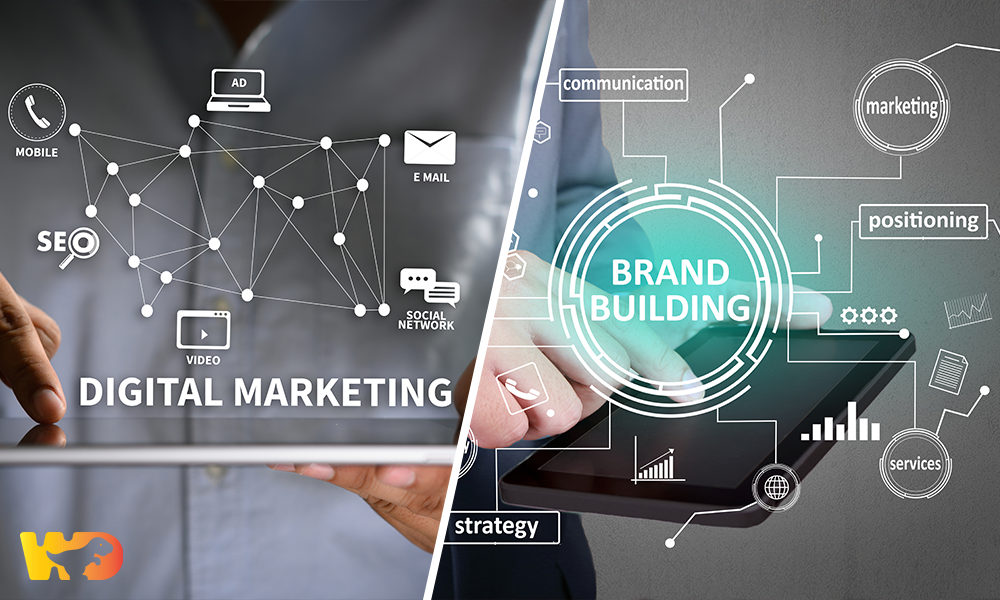
Digital Marketing vs Digital Branding 2026: Complete Career & Strategy Guide
In 2026, businesses are no longer debating whether they should go digital—the answer to that question has already been settled. Digital presence is no longer optional; it is a necessity for survival and growth. The real challenge today lies in how to go digital in the right, effective, and sustainable way. This is exactly where Digital Marketing and Digital Branding come into the picture.Although these two terms are often used interchangeably, they serve very different purposes. Many people assume that digital marketing and digital branding mean the same thing, but in reality, they focus on distinct goals, strategies, and outcomes. Understanding this difference has become more important than ever in today’s highly competitive and fast-evolving online ecosystem.
Digital marketing is primarily focused on short-term performance—driving traffic, generating leads, increasing conversions, and boosting sales through measurable campaigns. On the other hand, digital branding is about long-term impact. It focuses on building a strong brand identity, earning customer trust, creating emotional connections, and ensuring consistent brand recall across digital platforms. In 2026, successful businesses don’t choose between digital marketing and digital branding—they combine both. While digital marketing brings customers to your business, digital branding makes them stay, trust, and return. Together, they shape how a brand is perceived, remembered, and recommended.
This blog will give you a clear and practical understanding of the difference between digital marketing and digital branding in 2026. We’ll cover their key strategies, tools, career opportunities, required skills, salary potential, and future scope.
What is Digital Marketing?
Digital marketing is the strategic use of online platforms and data-driven tools to promote products or services with the goal of delivering measurable business growth. It focuses on attracting customers, generating leads, increasing sales, and achieving quick, trackable results. Performance, numbers, and outcomes are at the core of digital marketing.Digital marketing uses platforms such as Google Search and Display, Facebook, Instagram, YouTube, LinkedIn, and email marketing to reach the right audience at the right time. Every campaign is carefully planned to encourage user action—whether it’s clicking an ad, filling out a lead form, subscribing to updates, or making a purchase.
In 2026, digital marketing has become more advanced and data-driven than ever before. AI-powered tools and analytics help marketers understand customer behavior, optimize campaigns in real time, and improve return on investment. Decisions are backed by data such as impressions, clicks, conversions, cost per lead, and revenue generated.Businesses today expect speed, transparency, and accountability, and digital marketing delivers on all three. It plays a crucial role in product launches, limited-time offers, seasonal discounts, and performance-based campaigns that directly impact revenue and growth.
Digital marketing is best suited for short-term and mid-term goals. Its success is measured by clear, performance-focused metrics:
How many leads were generated?
What was the conversion rate?
What was the cost per acquisition?
How much revenue did the campaign deliver?
Key Components of Digital Marketing
Digital marketing is built on multiple channels, each designed to achieve specific business objectives. A well-planned digital strategy combines these components to ensure visibility, engagement, and conversions across the customer journey.
Search Engine Optimization (SEO) plays a critical role in improving a website’s visibility on search engines like Google. By optimizing content, keywords, technical structure, and user experience, businesses can attract high-intent organic traffic and build long-term credibility online.
Paid Advertising (PPC), including platforms such as Google Ads and Meta Ads, helps brands gain instant visibility. These campaigns are performance-driven and allow precise targeting based on location, interests, behavior, and intent. PPC is especially effective for quick lead generation, product launches, and competitive markets.
Social Media Marketing focuses on promoting content, products, and offers on platforms like Instagram, Facebook, LinkedIn, and X. It helps brands engage with their audience, increase awareness, drive website traffic, and support paid campaigns through organic and sponsored content.
Email Marketing is used to nurture leads and maintain customer relationships. Through newsletters, promotional emails, and automated workflows, businesses can stay connected with their audience, share updates, and encourage repeat purchases.
Content Marketing acts as the foundation of all digital marketing efforts. Blogs, videos, reels, case studies, and social posts are created to educate, attract, and guide users through the buying journey. Strong content improves SEO performance, supports social media, and increases trust.
In 2026, automation and AI-powered tools are deeply integrated into digital marketing. Campaign management, audience segmentation, performance analysis, and content personalization are increasingly driven by data and intelligent systems. As a result, digital marketers are expected to have a strong understanding of tools, analytics, and data-driven decision-making to deliver consistent and scalable results.
What is Digital Branding?
Digital branding is the process of building a strong, consistent, and memorable online identity that connects emotionally with the audience. Instead of focusing on immediate sales, digital branding shapes how people perceive, remember, and trust a brand over time. It is about creating meaning, credibility, and long-term value in the digital space. Digital branding goes beyond logos and colors. It focuses on brand storytelling, tone of voice, visual consistency, messaging, and core values across all digital platforms. Every touchpoint—website, social media, content, ads, and customer interactions—works together to reflect the brand’s personality and promise. The objective is to stay in the customer’s mind even when they are not ready to buy.
In 2026, consumers are more selective than ever. They prefer brands they relate to, believe in, and emotionally connect with. Digital branding helps businesses stand out in crowded online markets by clearly communicating who they are, what they stand for, and why they exist. It builds confidence and familiarity, which strongly influences future buying decisions.
Strong digital branding answers fundamental questions that every audience subconsciously asks:
Who is this brand?
What values does it represent?
Can I trust it?
Does it align with my beliefs and lifestyle?
Unlike performance marketing, digital branding works gradually and strategically, but its impact is deep and long-lasting. When branding is done right, marketing efforts become more effective because customers already recognize the brand, feel comfortable engaging with it, and are more likely to choose it over competitors.
Key Elements of Digital Branding
Digital branding is built on several core elements that together shape how a brand is seen, felt, and remembered online. One of the most important components is brand identity, which includes the logo, color palette, fonts, design language, and overall visual style. These elements ensure consistency across all digital platforms and help create instant recognition.Equally important is the brand voice, which defines how a brand communicates with its audience. Whether the tone is friendly, professional, bold, emotional, or authoritative, it must remain consistent across websites, social media, ads, emails, and content. A clear and consistent voice helps audiences feel familiar with the brand and builds trust over time.
Storytelling plays a central role in digital branding. Brands share their journey, mission, values, behind-the-scenes moments, team culture, and real customer stories to create emotional connections. Instead of pushing sales messages, storytelling helps humanize the brand and makes it more relatable. On social media, branding-focused strategies prioritize engagement, conversations, and community building rather than direct selling. The website experience is another critical part of digital branding. Design, navigation, content tone, and user experience all reflect the brand’s personality and professionalism. Every interaction comments, messages, reviews, and customer support responses contributes to how the brand is perceived online.
In 2026, authenticity and transparency have become the strongest branding differentiators. Audiences connect more with brands that are honest, value-driven, and consistent in their messaging. Businesses that communicate openly, show real stories, and stay true to their values are more likely to build long-term loyalty and credibility in an increasingly crowded digital space.
Digital Marketing vs Digital Branding: Core Differences
The biggest difference between digital marketing and digital branding lies in their core objective. Digital marketing is designed to deliver immediate and measurable outcomes such as leads, website traffic, app installs, and sales. Digital branding, on the other hand, focuses on building long-term trust, credibility, and a strong brand image that stays in the customer’s mind over time.
Digital marketing is highly performance-driven. Every campaign is tracked through clear metrics like impressions, clicks, conversions, cost per lead, and return on investment (ROI). Strategies are constantly tested, optimized, paused, or scaled based on data and results. This makes digital marketing flexible, fast, and ideal for short-term goals and revenue-driven campaigns.
Digital branding works at a deeper, emotional level. It focuses on how people feel about a brand, how well they remember it, and whether they trust it enough to choose it over competitors. Branding success is measured through perception, loyalty, engagement, recall, and reputation rather than immediate numbers.
Marketing campaigns can be launched quickly and adjusted overnight, but branding requires time, consistency, and long-term commitment. Digital marketing actively pushes products and offers in front of the audience, while digital branding naturally pulls people toward the brand by creating familiarity and emotional connection.
In 2026, successful businesses understand that digital marketing and digital branding are not competing strategies—they are complementary. Digital marketing drives growth and revenue, while digital branding strengthens trust and loyalty. The strongest brands balance both, using marketing to generate results and branding to sustain them over the long run.
Which One Should You Choose?
If you enjoy fast-paced work focused on quick results, numbers, data analysis, tools, and performance-driven campaigns, digital marketing is the right choice for you. It suits those who like testing strategies, optimizing campaigns, and seeing immediate outcomes in the form of leads, traffic, and sales.
On the other hand, if you are more inclined toward creativity, storytelling, brand communication, and creating a long-lasting emotional impact, digital branding may be a better fit. It is ideal for professionals who enjoy shaping a brand’s identity, voice, and perception over time.
In 2026, the most successful professionals are those who understand both digital marketing and digital branding. When combined, these skills help create strong brands that not only attract customers but also earn trust, loyalty, and sustainable business growth.
Conclusion
Digital marketing and digital branding are not competitors; they are partners. Digital marketing brings traffic and sales, while digital branding builds trust and loyalty. In 2026, businesses and professionals who balance both will grow faster and stronger.

